Generic selectors
Exact matches only
Search in title
Search in content
Post Type Selectors
⚠️ FOR RESEARCH PURPOSES ONLY — This compound is not FDA approved. All data presented is from clinical trials for educational reference.

5 Amino

Price range: $40.00 through $880.00

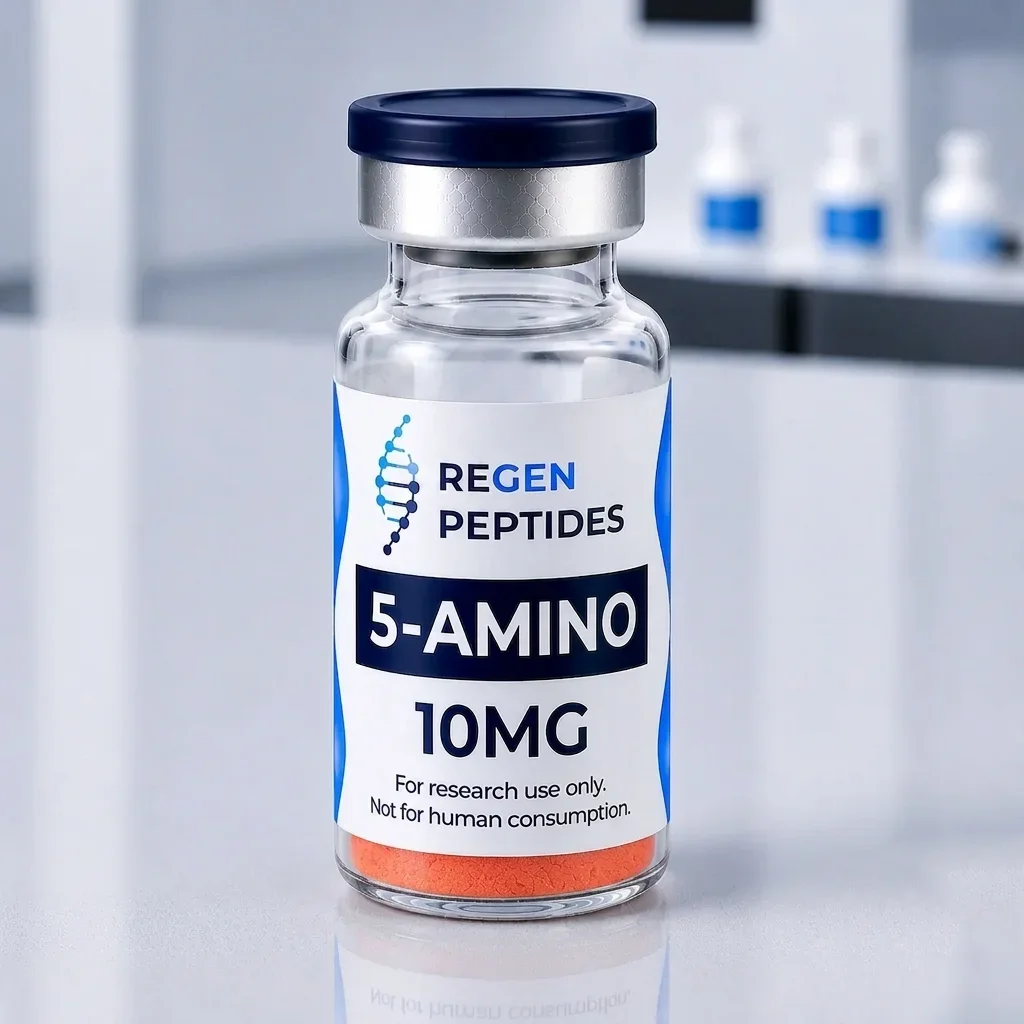
5 Amino Blend is a custom research formulation composed of four well-studied peptides: GHK-Cu (50mg), TB-500 (10mg), BPC-157 (10mg), and KPV (10mg). This 80mg synergistic matrix is engineered to investigate complex biological processes including extracellular matrix remodeling, cellular migration, and angiogenesis. By combining the copper-mediated signaling of GHK-Cu with the actin-binding properties of TB-500 and the cytoprotective effects of BPC-157 and KPV, researchers can explore multifactorial pathways of systemic recovery. This high-purity lyophilized powder is intended strictly for laboratory research and must be handled by qualified professionals only.

SKU 5AM10-2123 Category

Certificate of Analysis

Third Party Tested by Freedom Diagnostics

99.72%

Purity
Variant 5-Amino-1MQ
Lot # AM50-3
Labeled 50mg
Actual 52.58mg
Tested May 10, 2026

99.32%

Purity
Variant 5-Amino-MQ
Lot # NGP-5AM50
Labeled 5-amino-mq
Actual 52.14
Tested Apr 2, 2026

Compound Information

Technical specifications

What Is 5-Amino

Type NNMT (Nicotinamide N-methyltransferase) Inhibitor
CAS Number 42464-96-0
Molecular Weight 170.21 g/mol
Molecular Weight (Cu) N/A
Amino Acids N/A
Sequence N/A
Formula C10H10N2

Stability Information

Lyophilized Powder

−20°C

Reconstituted

2-8°C

Product

Specifications

Molecular Formula C10H11N2+
Molecular Weight 159.21g/mol
Sequence N/A
Purity ≥99% (HPLC verified)
Form Lyophilized powder
Appearance White to off-white powder
Solubility Soluble in water, bacteriostatic water
Storage -20°C (lyophilized), 2-8°C (reconstituted)

FAQ

Frequently asked questions

What is the primary target of 5-Amino-MQ?
It selectively targets and inhibits the enzyme NNMT (Nicotinamide N-methyltransferase).
By inhibiting NNMT, it increases intracellular NAD+ levels, which in turn boosts mitochondrial function and energy expenditure.
Scroll to Top